The Challenge
Most health applications are either too complex or present data in a dry, unengaging way. The goal of Axis was to use Artificial Intelligence (AI) to make lifestyle changes feel personal and motivating. The design is minimalist, ensuring that data serves as a compass rather than a burden.
User Experience
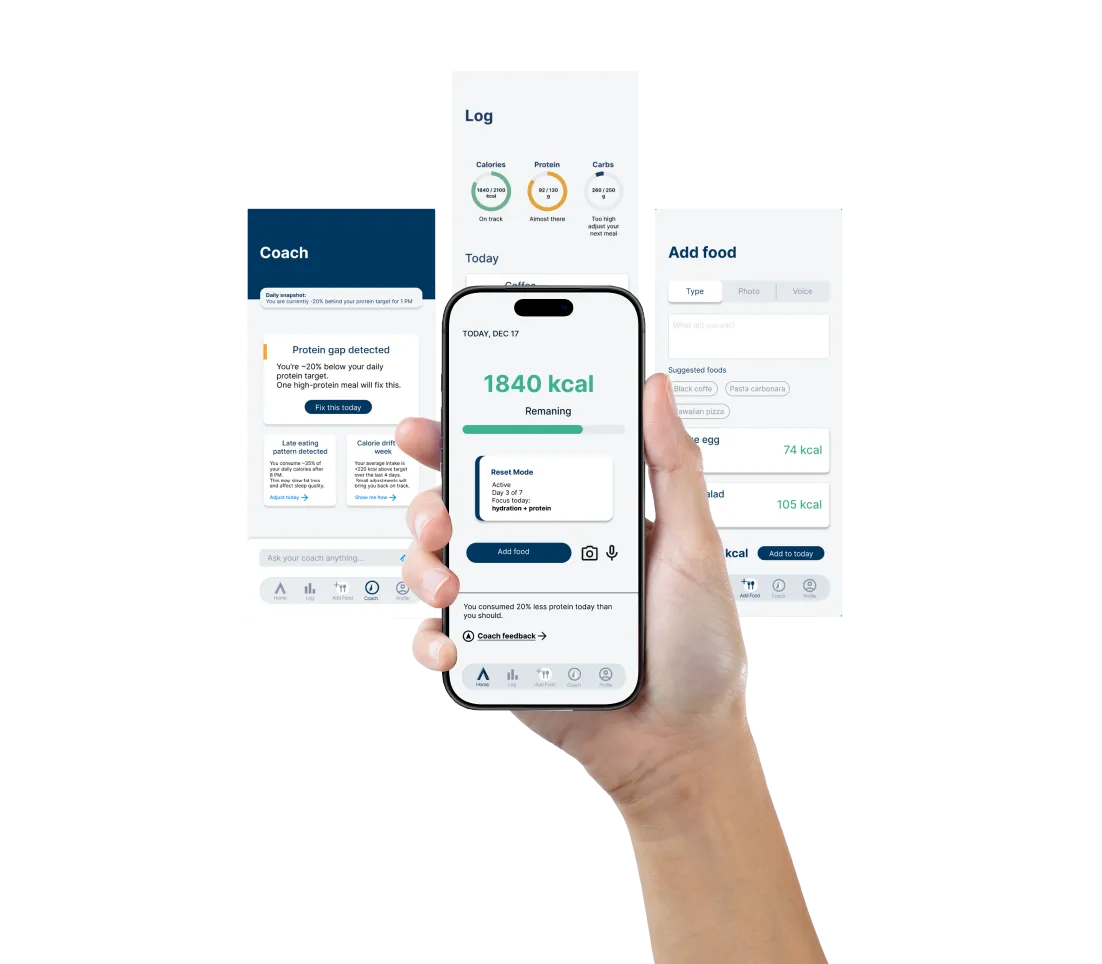
The speed of data entry is crucial for the success of such an application. Axis offers three alternative paths for maximum convenience:
Visual Logging: Quick entry based on photo recognition.
Voice Input: Natural language recording for ultimate speed.
Intelligent Typing: Predictive search for frequently consumed foods.
AI Coach
The ‘Coach’ feature is the heart of the app. Instead of confronting users with their mistakes at the end of the day, it acts proactively:
Deficit Detection: Instantly notifies you if, for example, your protein intake falls short of your goal, and suggests specific solutions.
Pattern Recognition: Alerts you to habits like late-night snacking and helps you get back on track.
Design System & Visual Strategy
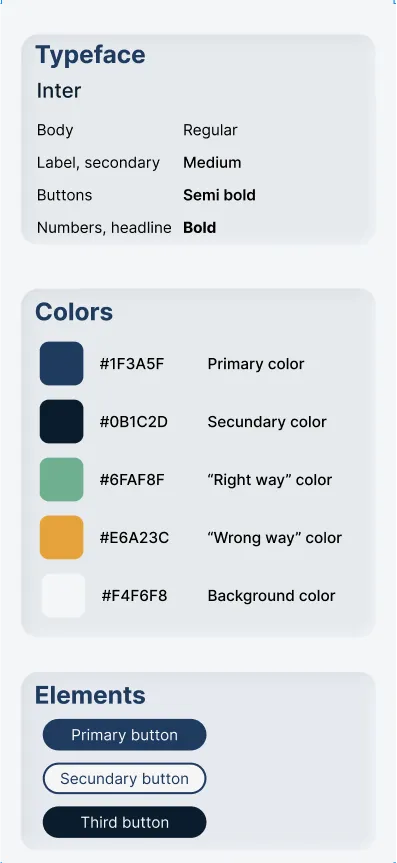
I crafted the visual world of Axis with precision and empathy in mind. The clean interface keeps the focus on the data and the user’s progress.
Psychology-based Color Theory: Guidance, Not Punishment One of the most significant strategic decisions in the project was the exclusion of the color red for feedback:
Reinforcement: The #6FAF8F shade of green provides validation for achieving milestones, offering positive reinforcement.
The Concept: In digital interfaces, red often signifies errors, restrictions, or punishment, which can be demotivating during a lifestyle change.
The Solution: I chose a warm orange (#E6A23C) for alerts. It draws attention to discrepancies but guides the user back to the right path supportively, rather than inducing guilt.